
Münster, Germany – Headquarters 1 German-Netherlands Corps (1GNC) welcomed NATO Secretary General Mark Rutte, German Federal Chancellor Friedrich Merz and Dutch Prime Minister Rob Jetten for a high-level visit, highlighting the headquarters’ key role in NATO’s collective defence.
Since 1 July 2026, 1GNC has held tactical command responsibility for NATO land operations in the defence of Estonia and Latvia. From its headquarters in Münster, the multinational corps is responsible for integrating assigned forces and Allied reinforcements into a coherent command structure, strengthening NATO’s ability to defend its eastern flank.
The joint visit by NATO’s Secretary General and the political leaders of Germany and the Netherlands, 1GNC’s two framework nations, underlined the importance of multinational cooperation and military readiness in safeguarding Allied territory.
From political commitment to military readiness
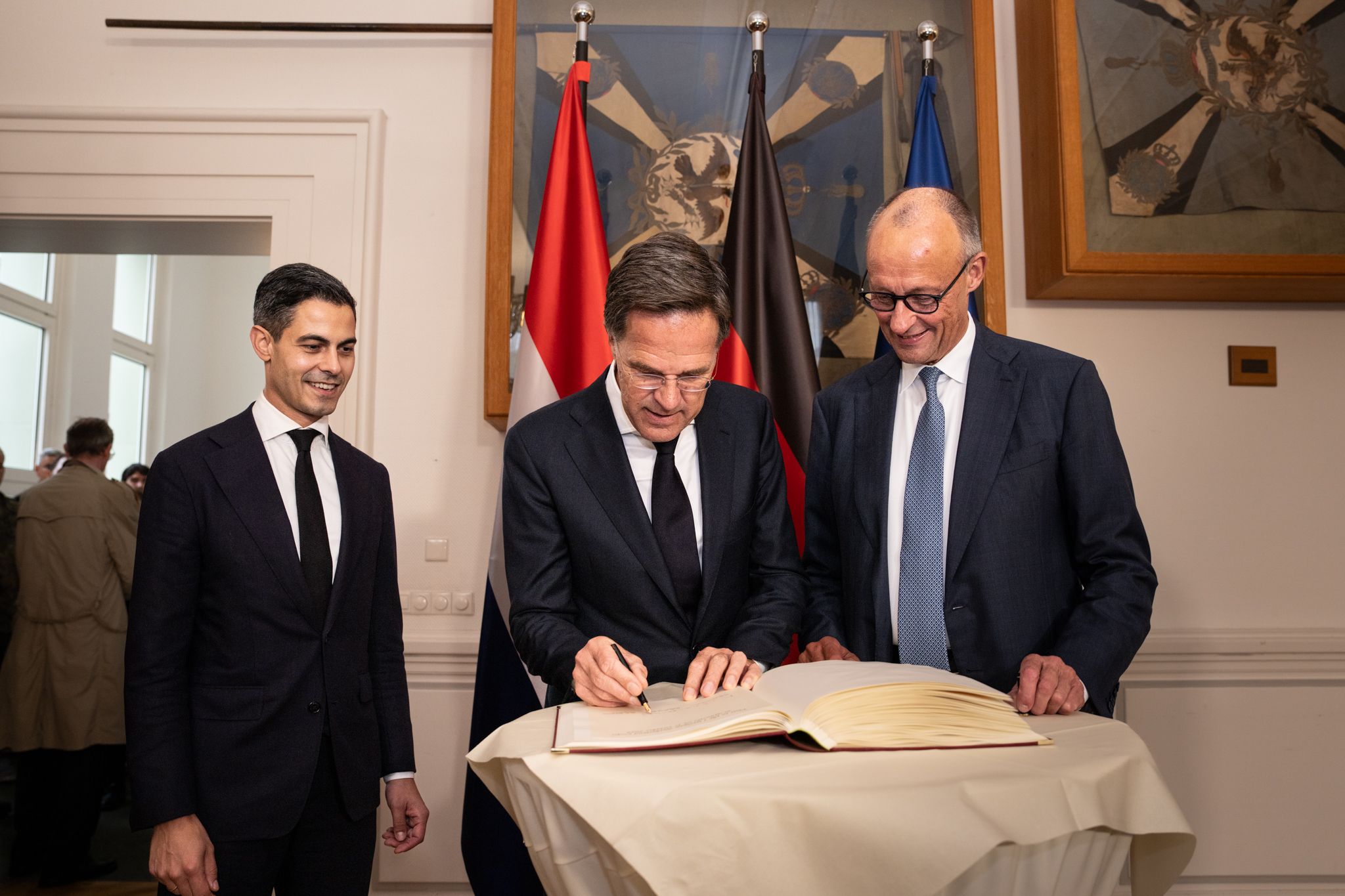
The three leaders were welcomed with military honours and the national anthems of Germany and the Netherlands, followed by the signing of the headquarters’ guestbook.
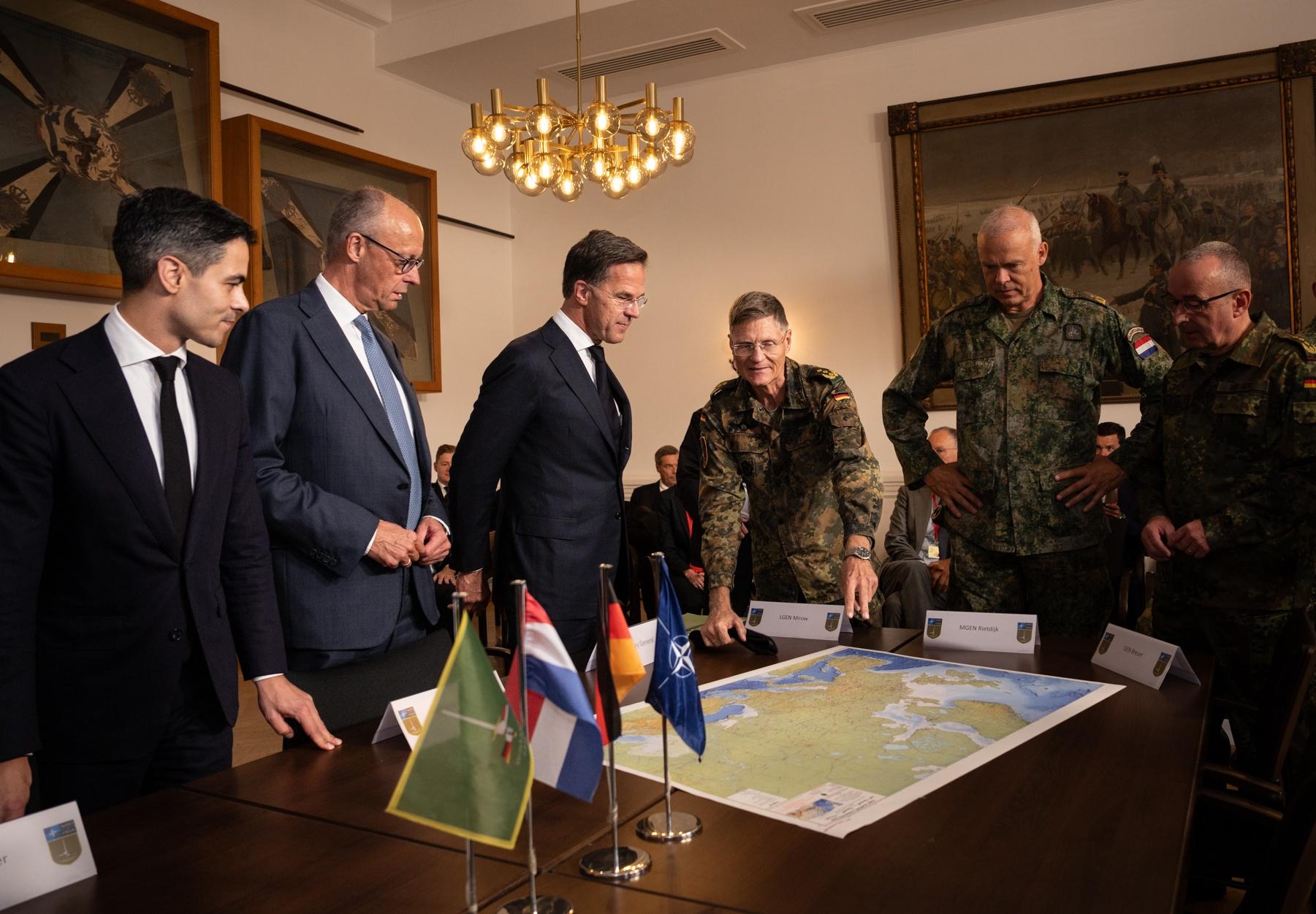
During a command briefing, the delegation received an update on 1GNC’s operational responsibilities, readiness and continued capability development. Discussions focused on the headquarters’ ability to command multinational land forces and coordinate Allied contributions to NATO’s collective defence.
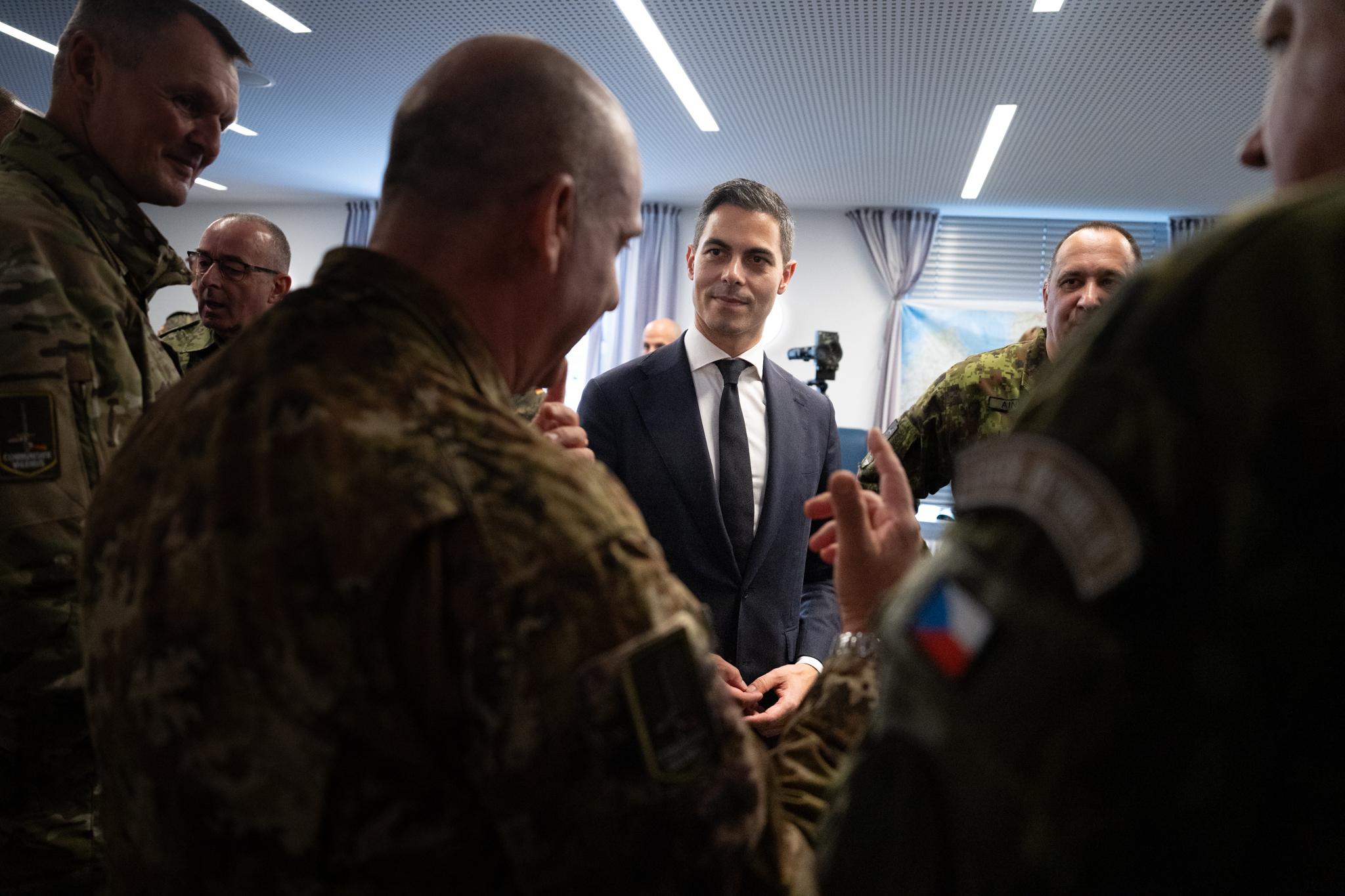
The visit also provided an opportunity to meet military personnel from across the headquarters. With 16 participating nations, 1GNC brings together expertise, experience and capabilities from across the Alliance. These daily contributions are essential to maintaining an effective and ready multinational command.
Together Strong – Allied cooperation in action
Germany and the Netherlands, as 1GNC’s two framework nations, provide the foundation for a headquarters built on multinational cooperation and shared responsibility. This close partnership, reinforced by contributions from Allies across NATO, enables 1GNC to operate as an integrated tactical headquarters, capable of commanding multinational land forces.
As NATO continues to strengthen its deterrence and defence posture, 1GNC plays a vital role in translating Allied commitments into credible military capabilities. Its responsibility for Estonia and Latvia reflects the trust placed in the headquarters and the importance of working together across national boundaries.
The programme at 1GNC concluded with a press engagement.
Following the visit, NATO Secretary General Mark Rutte attended a ceremony at Münster’s Historic Town Hall, where he accepted the International Prize of the Peace of Westphalia 2026 on behalf of NATO. The award recognised the Alliance’s contribution to peace, stability and freedom through cooperation, credible deterrence and collective defence.
The visit reinforced a central principle of NATO’s collective defence: the security of Allied nations depends on shared responsibility, sustained readiness and multinational cooperation.
Together Strong.